Modeling One Person Across More Than One Team
Use primary and secondary placements to show where someone belongs and how much of their capacity each team can actually plan around.
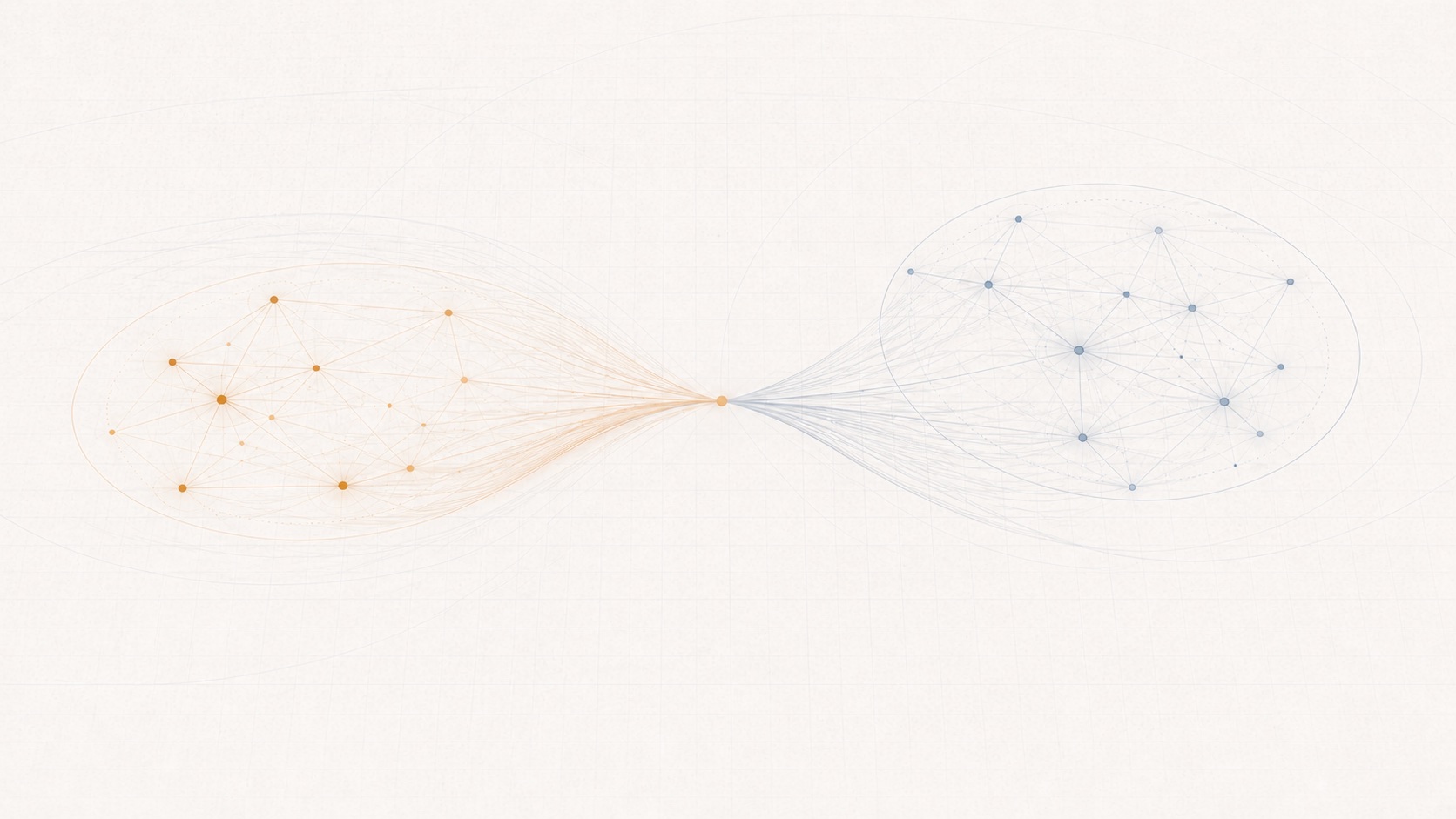
People often contribute to more than one team.
A designer may have a permanent home in Design while spending part of the quarter with a product team. A staff engineer may support a platform group and lend time to a security initiative. A fractional leader may work across several departments.
A single reporting line captures only part of that arrangement. Orgonaut uses placements to make the full contribution explicit.
A home and a contribution
Every actor can have a primary placement and additional secondary placements.
The primary placement describes where the person, agent, or robot sits in the organisation. Secondary placements describe the other teams receiving some of their capacity. Each placement can carry an allocation percentage and effective dates.
Imagine a full-time designer whose primary placement is Product Design at 70%, with a secondary placement in the Checkout Team at 30%.
Orgonaut calculates the effective FTE for each placement:
- Product Design receives 0.7 FTE.
- The Checkout Team receives 0.3 FTE.
- The designer still represents 1.0 total FTE.
That is a much more useful planning picture than counting the same person as a full team member in both places.
Capacity stays visible
Allocation becomes particularly useful during planning. Team leaders can see the capacity they can reasonably depend on, while finance and operations keep one consistent record of the contributor.
Orgonaut also keeps over-allocation visible. If active placements add up to more than 100%, the model shows the tension so it can be discussed with the extra commitment in view.
Effective dates help with temporary arrangements. A secondary placement can begin for a project and end when that work is complete, preserving a clearer record of how the organisation operated at the time.
A small field with a large effect
Placement data feeds team FTE, cost rollups, matrix views, and scenario comparisons. A modest allocation change can therefore show up wherever the organisation is being reviewed.
This is one of the details I value most in Orgonaut. It gives cross-functional work a proper place in the organisational model and makes capacity conversations much easier to ground in reality.
You can read more in the guide to placements and allocation.